Origins and Evolution
History
More than a century of basketball in Scotland. From the first gymnasium games of the 1890s to a nationally organised sport with tens of thousands of participants today.
Transatlantic Arrival
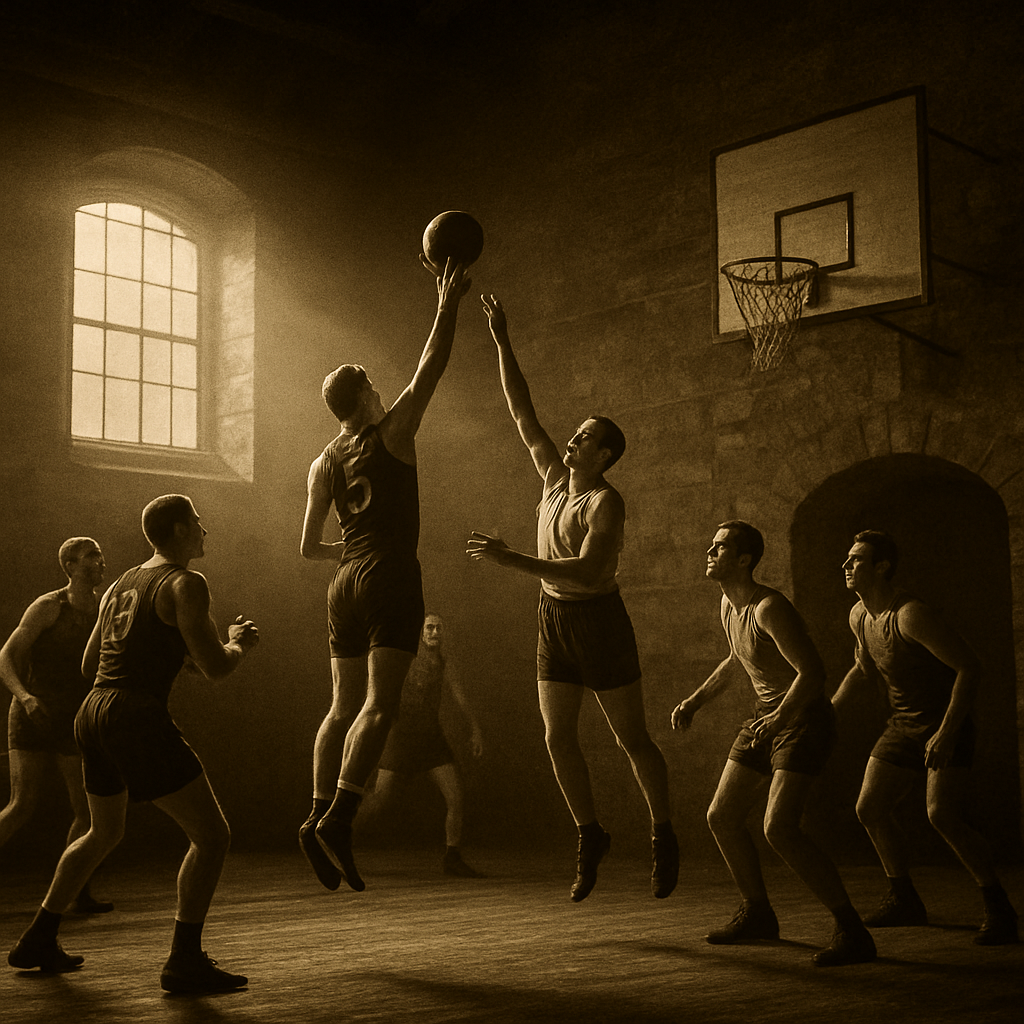
Basketball was invented by James Naismith in December 1891 in Springfield, Massachusetts. The game spread rapidly through the YMCA network, which had strong organisational connections across the Atlantic. By 1893, the first documented basketball activity in Scotland had been recorded, making the country one of the earliest adopters of the sport in Europe. The game was introduced in gymnasium settings attached to churches and educational institutions in Glasgow and Edinburgh, where the YMCA operated thriving branches.
Early Club Formation
The years following the initial introduction saw the establishment of the first informal clubs and organised competitions. Games were played in converted halls, church gymnasiums and early purpose built sporting venues. The sport attracted participants from the educated urban middle class and university communities. Connections with American students and academics studying at Scottish universities reinforced the sport's presence and introduced more refined playing standards.
Institutional Growth
Between the wars, basketball established itself within Scottish physical education programmes, particularly in secondary schools and teacher training institutions. Physical education teachers who had experienced the game during military service or through academic exchange programmes brought structured knowledge of coaching and game organisation back to their communities. The sport's compact indoor format made it well suited to the climatic conditions of Scotland, where wet winters limited outdoor sport.
Postwar Consolidation
The postwar period brought renewed interest in organised recreation and leisure. Returning veterans who had encountered basketball during service in North America and through contact with American forces stationed in Scotland helped sustain interest in the game. Amateur leagues developed in the Central Belt and informal competition between works teams and social clubs created a community infrastructure for the sport. This era also saw the first steps toward formal national administration.
National Affiliation
The formal registration of the Scottish Basketball Association with FIBA, the international governing body, represented a turning point in the sport's institutional development. Affiliation opened access to international competition, standardised rules and coaching education pathways. Scottish teams could now participate in continental and world level tournaments, creating aspirational targets that motivated development at all levels of the domestic game.
League Development
The two decades following national affiliation saw the construction of a formal league pyramid. Division structures, promotion and relegation systems, and regional competitions provided a competitive framework that encouraged club formation and player development. Coaching education programmes introduced formal qualifications and methodological standards. Facility investment from local authorities, often tied to broader leisure centre construction programmes, created dedicated spaces for the sport across urban Scotland.
Professionalism and Media
The 1990s brought a short lived but significant era of semi professional basketball in Scotland. Several clubs attempted to operate with paid players and attracted meaningful attendances at larger venue settings. This period raised the profile of the game and exposed Scottish basketball to a wider public audience. The influence of the NBA at the height of its global popularity through this decade also drove significant youth interest and participation growth.
Rebuilding and Broadening
Following the contraction of semi professional operations, Scottish basketball entered a period of consolidation focused on sustainable community based development. Grassroots programmes, school initiatives and coach education were prioritised. Women's and girls' basketball grew substantially during this period, supported by targeted investment and development officers working in local authority areas across the country.
Commonwealth Games Legacy
The Glasgow 2014 Commonwealth Games did not feature basketball as a medal event, but the associated sporting atmosphere and infrastructure investment had a significant downstream effect on participation. A generation of young Scots who had their interest in sport ignited by the games were directed toward basketball through school and community programmes that benefited from the legacy funding and increased public appetite for sport.
Contemporary Era
Scottish basketball in the current era is characterised by record participation numbers, a growing women's game, an active schools competition structure and increasing regional diversity. The sport has moved well beyond its original Central Belt concentration and now has active communities in every part of Scotland. Digital platforms have connected players and coaches across geographic distances, supported coach education and brought Scottish basketball to wider audiences through live streams and social content.
Perspective
Basketball did not merely arrive in Scotland. It was adopted, adapted and made Scottish.
Years of history in Scotland
Year of FIBA affiliation
Council areas with active programmes
Commonwealth Games legacy year