Skills and Craft
Techniques
Basketball is a game of continuous refinement. The techniques below represent the core vocabulary of the sport, from the absolute essentials every beginner must internalise to the advanced skills that separate good players from great ones.
The Crossover
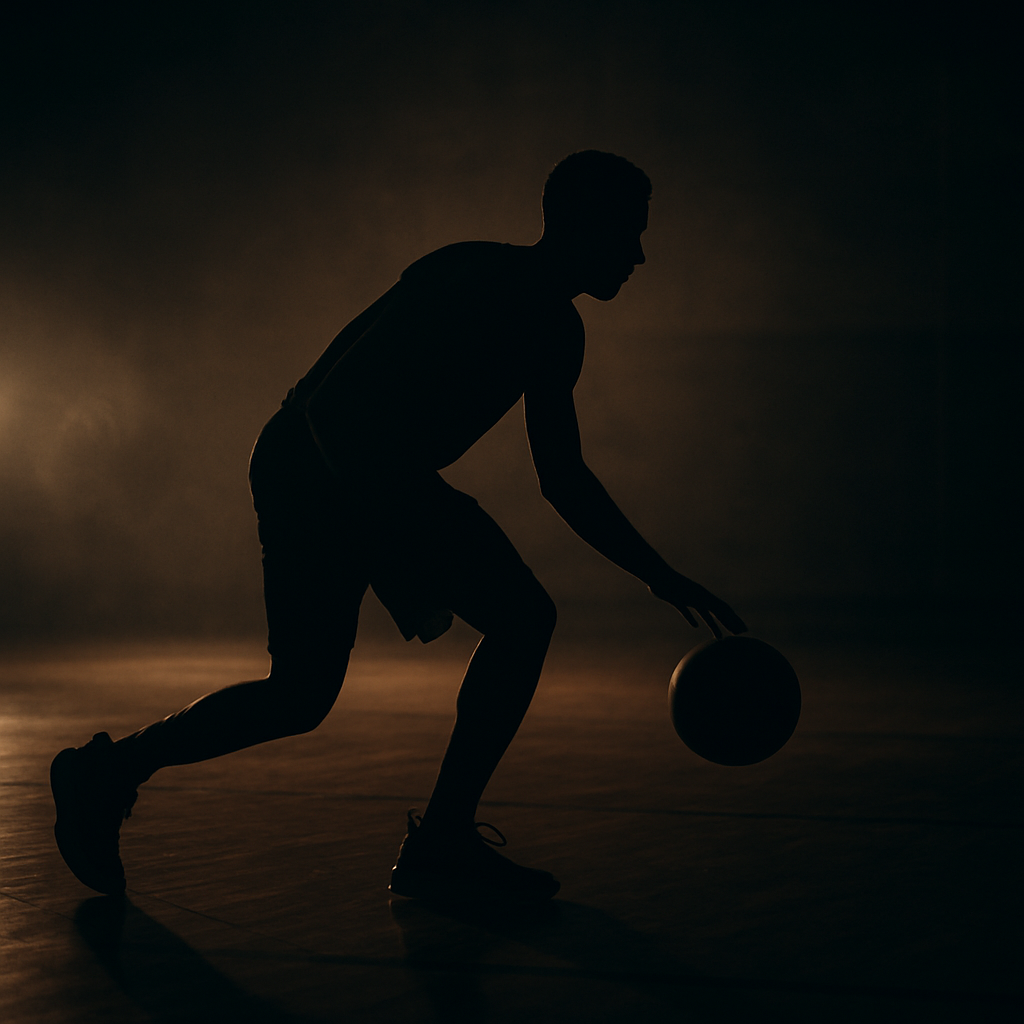
FundamentalThe crossover dribble is the foundation of ball-handling mastery. Transfer the ball from one hand to the other in front of your body with a sharp, low bounce. The deception lies in the shoulder fake that precedes it — commit your defender to one direction before cutting the other way. Practice this at speed until the motion becomes instinct, then layer in hesitation moves and direction changes to make it truly devastating.
Between the Legs
IntermediateThe through-the-legs dribble protects the ball from a close defender while changing direction. Drive the ball hard through the gap between your legs as you step forward, catching it cleanly on the other side. The key is keeping your dribble tight and low throughout — a loose bounce invites a steal. This move pairs powerfully with a step-back to create immediate separation.
Behind the Back
AdvancedAn elegant and effective technique when a defender cuts off your direct path. Sweep the ball behind your body in a wide arc, releasing it firmly so it bounces up cleanly into your trailing hand. Used in transition, it allows you to change direction without breaking stride. Elite practitioners use it at full speed, making it nearly impossible to anticipate.
Set Shot Mechanics
FundamentalEvery great shooter is built on the same foundation: feet shoulder-width apart, strong hand under the ball, guide hand on the side, elbow aligned with the target. The shot begins from the legs — drive energy upward through your core, extend your shooting arm, and release with a full wrist snap at the peak of your jump. The follow-through, often called the goose neck, is not optional. Hold it until the ball reaches the rim.
The Mid-Range Pull-Up
IntermediateThe pull-up jumper off the dribble is one of basketball's most reliable scoring weapons. Explode out of your last dribble, plant your feet simultaneously into a balanced stance, and elevate into your shot in one fluid motion. The danger of this technique is rushing the footwork — a hurried plant leads to a drifting shot. Discipline in the foundation creates consistency in the result.
The Floater
AdvancedDesigned to arc over the outstretched hands of rim-protecting defenders, the floater is a finesse shot that rewards touch and courage. As you attack the basket and a shot-blocker rises to contest, release the ball off one foot with a high, soft arc. The release point is earlier and higher than a conventional layup. Mastering this technique turns the paint from a danger zone into your most productive area.
Defensive Stance
FundamentalAll defence begins with posture. Feet wide, weight on the balls of your feet, hips low, back straight, and hands active at your sides. This stance allows explosive lateral movement in any direction. A defender who stands upright can be beaten by the first step alone. Train yourself to maintain this position for extended periods — defensive excellence is built on conditioning as much as skill.
Lateral Slide Footwork
FundamentalStaying in front of your opponent requires efficient lateral movement. Lead with the foot in the direction of travel, pushing off the trailing foot, and never allow your feet to cross. Crossing feet kills momentum and creates vulnerability. The slide is a shuffling, low-to-ground motion — keep your hips down throughout. Pair this with active hands to influence ball movement and create turnovers.
Help-Side Positioning
IntermediateIndividual defence operates within a team defensive system, and help-side positioning is its cornerstone. When your assigned opponent does not have the ball, drop toward the paint along an imaginary line between your opponent and the basket, maintaining sight lines to both the ball and your assignment. This positioning enables you to rotate to stop dribble penetration by teammates' opponents while recovering to contest your own assignment.
Chest Pass
FundamentalThe chest pass is the most efficient way to move the ball quickly between players in space. Hold the ball at chest height, step toward your target, and snap both wrists outward as you release, creating backspin that stabilises the ball in flight. The pass should arrive at your teammate's chest, never at their feet or above their head. Accuracy and pace are both essential — a slow, flat pass is easily intercepted.
No-Look Pass
AdvancedThe no-look pass is a weapon of misdirection, using eye contact to manipulate the defence before delivering to a different target. Train it by developing peripheral vision and reading movement without direct gaze. The mechanics of the pass itself remain identical to conventional passing — only the direction of your eyes changes. This technique is only effective when paired with the genuine threat to pass or drive in the direction you are looking.
Understand the Rules
Technique only matters within the laws of the game.