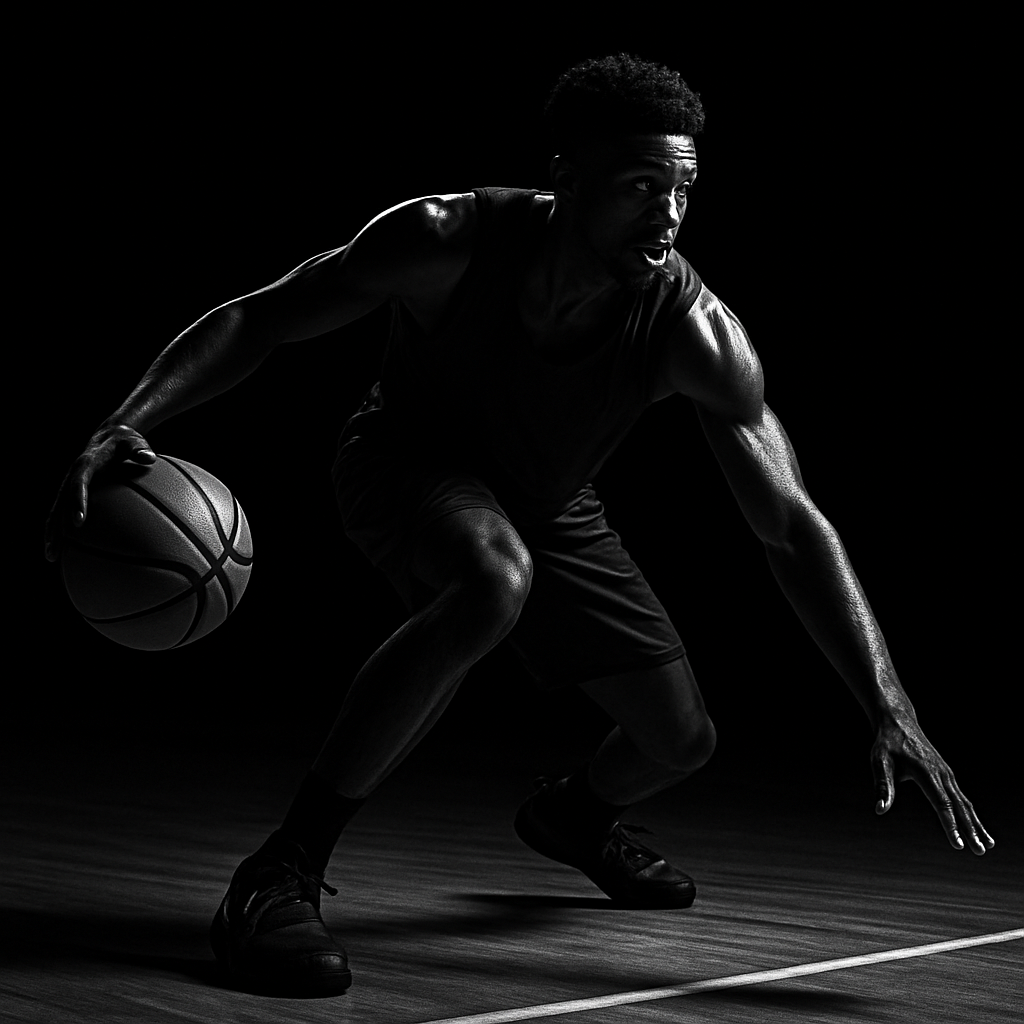
Dribbling is the act of bouncing the ball continuously with one hand while moving around the court. It is the primary method by which a player advances the ball from one area to another and is subject to specific rules that govern how it can be performed.
The foundations of effective dribbling begin with hand position. The fingertips, rather than the palm, should be in contact with the ball. This grip provides the sensitivity required to control the speed and direction of each bounce. Beginners frequently use the palm out of habit, which reduces feel and slows the dribble.
Body positioning is equally critical. A low stance with bent knees and a forward lean keeps the ball close to the body and makes it harder for defenders to reach in and disrupt possession. Keeping the non dribbling arm slightly extended creates additional protection.
The crossover dribble is the most fundamental change of direction move. The ball is transferred from one hand to the other in front of the body in a low, quick motion. Effective crossovers require the dribble to remain below knee height to minimise the time the ball spends in open space between hands.
The behind the back dribble is a more advanced technique used to change direction while shielding the ball with the body. It requires a smooth arc of the ball from one hand to the other behind the lower back, with the receiving hand positioned to collect cleanly without breaking stride.
The between the legs dribble, often called the tunnel dribble, passes the ball through the space between the feet as the player steps forward. It offers directional change with strong body protection and is a component of many advanced ball handling combinations.
Progressive training involves beginning with stationary drills at low speed before gradually introducing movement and then defensive pressure. Players should work with both the dominant and non dominant hand equally. Most players have a significantly weaker off hand and deliberate targeted practice is required to close the gap.
Consistent dribbling practice builds the muscle memory necessary to handle the ball without allocating visual attention to it. A player who can dribble without looking at the ball is free to survey the court, identify open teammates and read defensive positioning in real time.