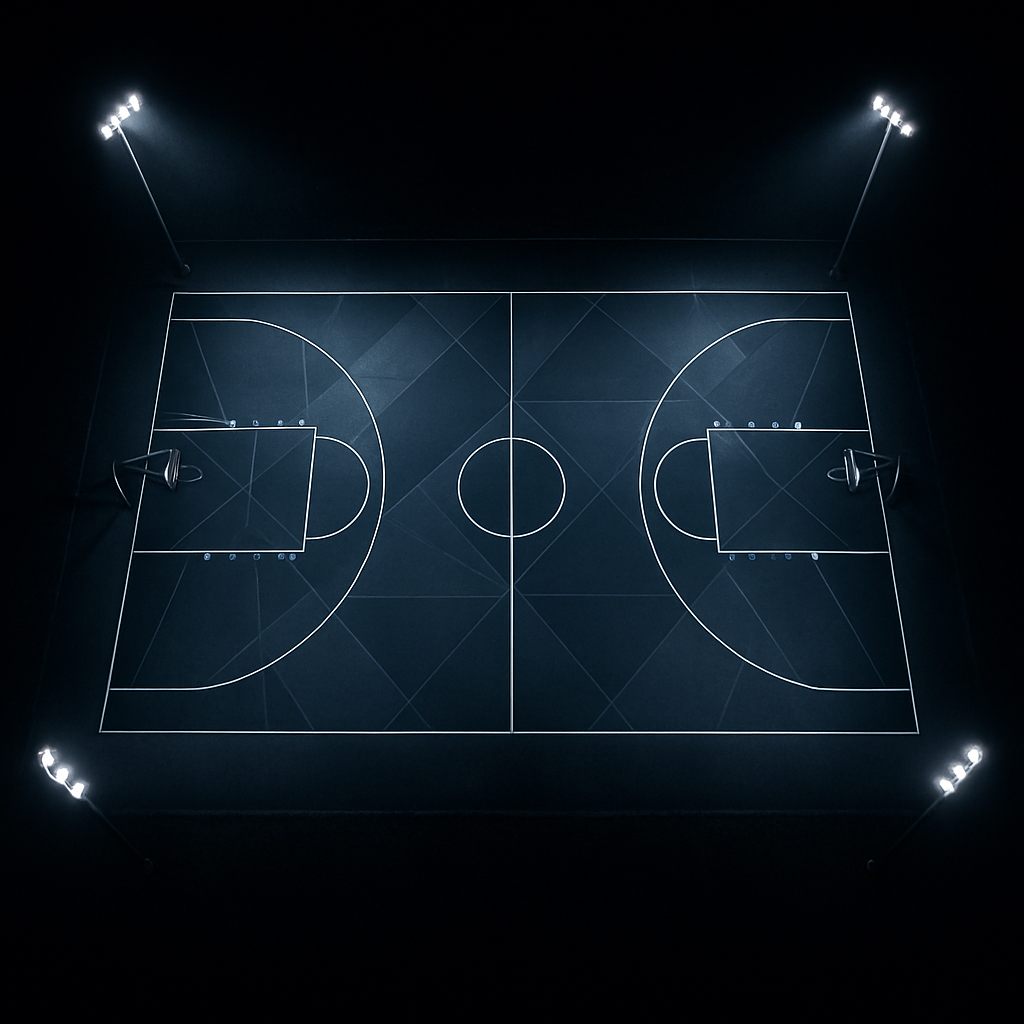
The pick and roll is a two player offensive action in which one player sets a stationary screen, known as a pick, on a defender guarding the ball handler. The ball handler then uses the screen to create separation, while the screening player rolls toward the basket to receive a pass or take an open shot.
The effectiveness of the action relies on both participants executing their roles with timing and precision. The screener must establish a legal stationary position before contact is made, with the feet shoulder width apart and the arms held close to the body. Moving into the screen too early or extending the arms during contact results in an offensive foul.
For the ball handler, the key is reading the defensive reaction. If the defender guarding the screener drops back to protect the basket, the ball handler has space to attack the mid range or take a three point shot. If the screener's defender steps up to hedge or trap, the rolling player slips behind for an open catch and finish.
The timing of the roll itself is crucial. The screener should begin rolling the moment the ball handler turns the corner of the screen. Hesitating allows the defence to recover and eliminates the advantage the action was designed to create.
Pop variations of the action, in which the screening player steps back toward the three point line after setting the screen rather than rolling to the basket, have become increasingly common as teams place skilled long range shooters in the screening role. This forces the defence to choose between protecting the basket and contesting the outside shot.
Defensively, teams employ various schemes to neutralise the pick and roll. Switching, in which defenders trade assignments at the moment the screen is set, is simple in principle but requires height and mobility from all five players to execute without creating mismatches.
Dropping, in which the screener's defender retreats below the level of the screen, concedes the mid range area but maintains paint protection. Hedging, in which the screener's defender aggressively steps up to slow the ball handler's progress, requires the trailing defender to recover quickly or the roll becomes available.
Developing proficiency in the pick and roll requires repetitive practice of the two player action against both passive and live defenders. The goal is to build automatic reads so that both participants react to defensive positioning without verbal communication in the flow of live play.